
Lighting is one of the most important elements of interior design, yet it is often considered only after the furniture, colours and finishes have been selected. The right lighting can make a room feel larger, warmer and more welcoming. It can also improve visibility, support everyday activities and highlight the features that give a property its character.
With so many light fixtures, colours, styles and technologies available, selecting suitable products can feel complicated. A successful lighting scheme should balance appearance with practicality, ensuring that every room receives the right amount and type of light.
Our showroom stocks a large selection of lighting products, with additional designs available to order through our suppliers’ catalogues. From decorative designer lighting to practical fittings, our team can help you make suitable choices and arrange professional installation through our fully qualified electricians.
Why Is Good Lighting Design Important?
Lighting affects how a room looks, feels and functions throughout the day. A single central fitting may provide general brightness, but it rarely meets every requirement within the space.
A well-planned lighting design can:
- Create a comfortable and welcoming atmosphere
- Provide clear visibility for everyday activities
- Highlight artwork, furniture and architectural details
- Make smaller rooms feel more open
- Define separate areas within an open-plan space
- Improve safety around stairs, entrances and work surfaces
- Complement the colours and style of the interior
- Reduce unnecessary energy use
Planning the lighting before decorating or renovating also allows electrical points, switches and controls to be positioned correctly.
Understanding the Three Main Types of Lighting
Most effective lighting schemes combine three different layers: ambient, task and accent lighting.
Ambient Lighting
Ambient lighting provides the main source of illumination within a room. Ceiling pendants, chandeliers, recessed downlights and flush-mounted fittings are commonly used for this purpose.
The aim is to distribute comfortable general light across the space without creating excessive glare or leaving important areas in shadow.
Task Lighting
Task lighting provides focused illumination for specific activities. Examples include reading lamps beside a chair, under-cabinet lights over kitchen worktops and illuminated mirrors in bathrooms.
This type of lighting should be bright enough to support the task without causing uncomfortable reflections or strong contrasts.
Accent Lighting
Accent lighting adds depth and visual interest. It can be used to draw attention to artwork, shelving, textured walls, fireplaces or decorative features.
Wall lights, picture lights, directional spotlights and concealed LED strips are popular accent-lighting options. Used carefully, they can help create a more refined and considered interior.
Choosing Lighting for the Living Room
The living room is used for relaxing, entertaining, reading and watching television, so it benefits from a flexible lighting scheme.
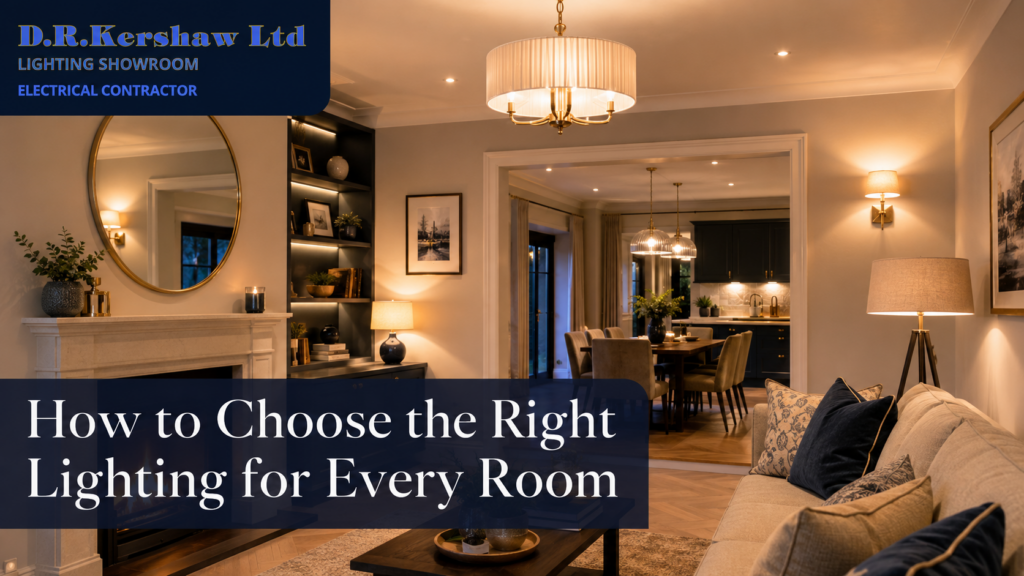
A ceiling pendant or designer light fixture can create a strong focal point and provide general illumination. Table lamps and floor lamps can then introduce softer light in seating areas, while wall lights or adjustable spotlights can highlight pictures and decorative details.
Dimmable lighting is particularly useful in a living room because it allows the atmosphere to change according to the activity. Brighter light may be preferred when entertaining guests, while a lower level can create a comfortable setting during the evening.
The scale of the fitting should suit the room. A small light may appear lost in a large space, whereas an oversized design can overwhelm a compact room.
Creating Practical Kitchen Lighting
Kitchen lighting must support food preparation, cooking, cleaning and socialising. It therefore needs to be practical as well as visually appealing.
General ceiling lighting should illuminate the room evenly, but additional task lighting is usually required above worktops, sinks and cooking areas. Under-cabinet lights can brighten preparation surfaces that might otherwise be shadowed by wall units.
Pendant lights are often installed above kitchen islands or breakfast bars. They can define the area and add decorative interest, although their height and spacing should be planned carefully to avoid obstructing views.
Light fixtures must also be positioned so that the person using a worktop does not stand between the main light source and the surface.
Selecting Bedroom Lighting
Bedroom lighting should promote relaxation while still providing enough brightness for dressing, reading and other daily routines.
A central ceiling light can provide general illumination, while bedside lamps or wall-mounted reading lights offer more focused control. Separate switches beside the bed can make these fittings easier to use.
Warm-toned light generally creates a softer and more restful atmosphere. If the bedroom contains a dressing table or wardrobe area, additional lighting may be needed to improve visibility without creating harsh shadows.
Decorative pendants, chandeliers and contemporary ceiling fixtures can give the bedroom a distinctive character, but comfort should remain the main priority.
Bathroom Lighting and Electrical Safety
Bathrooms require carefully selected lighting because electrical products may be exposed to moisture and water. Fixtures must have an appropriate IP rating for their position, and electrical work must comply with the relevant safety requirements.
Ceiling lighting can provide overall brightness, while illuminated mirrors or wall lights beside the basin can support shaving, skincare and grooming. Positioning lights on both sides of a mirror can help reduce facial shadows.
A qualified electrician should assess the bathroom zones and confirm which products are suitable for each location. Decorative appearance should never take priority over electrical safety.
Lighting Hallways, Stairs and Entrances
Hallways and staircases connect different areas of the property and require reliable illumination. Poorly positioned fittings can leave steps, corners and changes in floor level difficult to see.
Ceiling lights, wall fittings and recessed step lights can all be used to improve safety. In longer hallways, several smaller light sources may provide more balanced coverage than one powerful central fitting.
A statement pendant can add character to an entrance hall, particularly where the ceiling height allows it. Motion sensors or automatic controls may also be useful in frequently used circulation areas.
Choosing the Right Style of Light Fixture
Light fittings should complement the property without necessarily matching every other item exactly. Consider the colours, materials and shapes already present within the room.
Popular lighting styles include:
- Traditional chandeliers and lanterns
- Modern pendant lights
- Minimalist ceiling fittings
- Industrial-style metal fixtures
- Decorative glass lighting
- Wall-mounted lights
- Designer floor and table lamps
- Recessed and concealed lighting
The finish can also influence the overall effect. Brass and warm metallic tones may introduce elegance, while black, chrome and brushed steel can create a cleaner contemporary appearance. Glass fittings help maintain a lighter visual feel, particularly in smaller rooms.
Colour Temperature and Bulb Selection
The colour temperature of a bulb affects the atmosphere of the room. It is measured in kelvins and usually ranges from warm white to cooler daylight tones.
Warm white light is commonly chosen for living rooms and bedrooms because it creates a comfortable atmosphere. Neutral white may be suitable for kitchens and working areas, while cooler light is generally reserved for spaces where clear, detailed visibility is required.
Consistency is important. Using noticeably different colour temperatures within the same open-plan area can make the lighting appear uncoordinated.
LED bulbs are widely used because they consume less electricity than traditional incandescent bulbs and generally have a longer working life. When choosing an LED bulb, consider its brightness, colour temperature, fitting type and compatibility with dimmer switches.
Why Professional Lighting Installation Matters
Some lighting products may look simple, but installation can involve new wiring, circuit alterations, specialist controls or work in areas with additional safety requirements.
A fully qualified electrician can:
- Check whether the existing circuit is suitable
- Position fittings and switches correctly
- Install dimmers and lighting controls
- Confirm bathroom and outdoor product suitability
- Complete electrical connections safely
- Test the installation after completion
- Coordinate lighting work with a wider renovation
Professional input during the design stage can also prevent practical problems, such as poorly positioned pendants, insufficient task lighting or switches located in inconvenient places.
Explore Lighting Products in Our Showroom
Choosing lighting is easier when you can compare products, finishes and sizes in person. We stock a large selection of lighting products in our showroom and offer many additional designs through our suppliers’ catalogues.
With a broad choice of styles and colours available, we can help you find light fixtures that meet your practical needs and complement your property. Whether you require one statement fitting or a complete lighting scheme, our team can assist from the initial design stage through to professional installation.
Visit our showroom or contact us to discuss your requirements. With quality lighting products and support from our fully qualified electricians, we can help you add the perfect finishing touch to every room.